Esquire Realty Ciaramella & Co. is a premier real estate brokerage proudly rooted in Howard Beach and Ozone Park, Queens. Led by Brina Ciaramella Esq., an award winning and top-producing broker and local real estate attorney ranked in the top 3.5% of Realtors in Queens, our team combines legal expertise, deep neighborhood knowledge, and innovative marketing to deliver exceptional results. Trusted by buyers, sellers, and investors, we specialize in residential sales, luxury listings, and strategic negotiations. Known for community impact and award-winning service, Esquire Realty Ciaramella & Co. is dedicated to elevating the neighborhoods we serve.
I get calls all the time from sellers whose homes are listed but aren’t moving. Before I talk about a price reduction, I want to figure out why.
How are the photos? The description? The marketing? Are open houses happening? Is the agent answering the phone, following up and accommodating showings?
If those things aren’t happening, I’m not immediately convinced the price is the problem. New photography, better presentation, fresh marketing and a completely different strategy can absolutely breathe life into a stale listing.
But if all of those things are happening, buyers are coming through the door and nobody is making an offer, eventually we have to be honest about the price.Great marketing gets attention.
Great agents get people through the door. Neither can make the current buyer pool pay more than they believe a home is worth (which by the way, IS your home’s value!).
Sometimes you need a new strategy. Sometimes you need a new price. And sometimes you just need me, lol.
This morning, someone contacted me confused because she found a house online, asked to see it, and was then sent an exclusive buyer agency agreement to sign for several months. She wasn’t looking for a buyer’s agent. She thought she was contacting “the agent for the house”.
Somewhere in the listing information IS the name and number for the actual listing agent, but you may also see a much more prominent button to request a tour or connect with an agent- an agent that pays to receive buyer leads through that website. That agent may work for a completely different company and have no connection to the listing at all. And you, just a regular consumer who doesn’t do this for a living, really have no idea about any of it.
𝗦𝗼 𝗶𝗳 𝘆𝗼𝘂 𝘀𝗶𝗺𝗽𝗹𝘆 𝘄𝗮𝗻𝘁 𝘁𝗼 𝗰𝗼𝗻𝘁𝗮𝗰𝘁 𝘁𝗵𝗲 𝗹𝗶𝘀𝘁𝗶𝗻𝗴 𝗮𝗴𝗲𝗻𝘁 𝗮𝗯𝗼𝘂𝘁 𝗮 𝗽𝗮𝗿𝘁𝗶𝗰𝘂𝗹𝗮𝗿 𝗽𝗿𝗼𝗽𝗲𝗿𝘁𝘆, 𝗹𝗼𝗼𝗸 𝘁𝗵𝗿𝗼𝘂𝗴𝗵 𝘁𝗵𝗲 𝗹𝗶𝘀𝘁𝗶𝗻𝗴 𝗮𝗻𝗱 𝗳𝗶𝗻𝗱 𝘁𝗵𝗲 𝗮𝗴𝗲𝗻𝘁 𝘄𝗵𝗼 𝗮𝗰𝘁𝘂𝗮𝗹𝗹𝘆 𝗹𝗶𝘀𝘁𝗲𝗱 𝗶𝘁. You can contact that agent directly as an unrepresented buyer. That agent represents the seller, not you, and you’ll sign no agreements regarding buyer’s agent compensation.
𝗡𝗼𝘄, 𝗶𝗳 𝗮 𝗯𝘂𝘆𝗲𝗿’𝘀 𝗮𝗴𝗲𝗻𝘁 𝗶𝘀 𝘄𝗵𝗮𝘁 𝘆𝗼𝘂 𝘄𝗮𝗻𝘁- 𝘁𝗵𝗲𝗿𝗲’𝘀 𝗻𝗼𝘁𝗵𝗶𝗻𝗴 𝘄𝗿𝗼𝗻𝗴 𝘄𝗶𝘁𝗵 𝘁𝗵𝗮𝘁 𝗮𝘁 𝗮𝗹𝗹. In fact, there can be tremendous value in having someone exclusively representing your interests. But that’s a relationship you should understand before you enter into it.
The point isn’t that one way is better than the other. The point is to know who you’re calling. Remember that the biggest button on the page isn’t necessarily the listing agent.
As your real estate broker, I completely understand. You spend hours cleaning the house, making the beds, hiding the laundry, and then the buyer cancels five minutes before they’re supposed to arrive, or worse, never shows up at all. Unfortunately, not everyone values other people’s time the way we do.
Then there are the buyers who show up with an entire committee. They need their aunt’s opinion, they bring their boyfriend’s old roommate who’s “good with construction,” and show up with a little dog riding around in a purse. Before you know it, your home has become a field trip.And of course, some feel the need to open every cabinet, every closet, and every pantry, as if they’re expecting to find something revolutionary instead of shelves full of canned soup and paper towels. It can feel invasive, awkward, and honestly just plain strange when it’s your home they’re traipsing through.
But here’s the part I always remind my sellers of. Buying a home is one of the biggest financial decisions most people will ever make, and not everyone goes about it the same way. Some people overanalyze everything. Some need reassurance from everyone they know. Some just have quirky habits or are straight up weirdos.
The important thing is that these buyers have already been pre-qualified. They aren’t random people wandering through your house. They’re legitimate buyers who could very well be the ones writing you an offer.
So yes, sometimes you just have to suck it up, and we’ll get through it together. We’ll probably laugh about a few of them after they leave, but we’ll keep our eyes on the prize because that’s what matters.
At the end of the day, remember this: you’re not moving in with these people. You’re moving out… and taking their money.
✅ Co-op board must maintain their application and transfer requirements, and promptly provide them to a buyer, seller, or agent upon request.
✅ Within 15 calendar days the co-op board must acknowledge receipt of your application and notify you whether it’s complete or identify any missing items.
✅ Within 45 calendar days, the board must issue a written decision if you are approved, denied, or conditionally approved.
✅ Boards are permitted one 14-day extension with proper notice by email, with some additional summer recess notices, if applicable.
This applies to NYC residential co-ops with 10 or more units on standard sales, gifts, estate transfers, and trust transfers. There are some exceptions for government and affordable housing.
Penalties for noncompliance range from $1,000 to $2,000 per violation.
This law creates deadlines and accountability, but it still does not require a co-op board to explain why an applicant was denied.Local Law 58 of 2026 (formerly Intro. 1120-B), effective July 28, 2026.
One of the hardest real estate moves to pull off, logistically, financially, and emotionally, is selling one home in order to fund the purchase of the next one.It can absolutely be done. People do it successfully every day. But it requires proper timing, real education, honest guidance, and a plan that accounts for more than one possible outcome.
🔹 𝗧𝗛𝗘 𝗣𝗔𝗥𝗧 𝗠𝗢𝗦𝗧 𝗦𝗘𝗟𝗟𝗘𝗥𝗦 𝗗𝗢𝗡’𝗧 𝗥𝗘𝗔𝗟𝗜𝗭𝗘:
In New York State, the most commonly used Contract of Sale gives a buyer 45 days to obtain a mortgage commitment. If the buyer receives a good faith loan declination within that window, the contract is cancelled and the deposit is returned.
Even after a commitment letter is issued, there is still a small but real risk of post commitment failure to fund, where a loan falls apart late because of final conditions, employment changes, documentation issues, or underwriting concerns.
In other words:
👉 An accepted offer is not the same as a guaranteed sale.
👉 A contract is not the same as money in the bank.👉 A mortgage commitment is an important milestone, but the details of that commitment still matter.
One possible way to protect yourself is to make your purchase contingent on the successful sale of your current home.That means your obligation to complete the purchase depends on your own sale moving forward or closing under the terms negotiated in the contract.
This can be a very valuable protection, but whether a seller will accept it depends heavily on the market. If you are purchasing in a slower market, or the property has been sitting for a while, the seller may be more open to it. If you are competing in a hot Long Island market with multiple strong buyers, you are very unlikely to win the house with a sale contingency attached to your offer.So yes, ask whether it is possible. But do not build your entire plan around receiving a contingency that the market may not allow.
🔹 𝗪𝗛𝗬 𝗜 𝗢𝗙𝗧𝗘𝗡 𝗧𝗘𝗟𝗟 𝗦𝗘𝗟𝗟𝗘𝗥𝗦 𝗧𝗢 𝗪𝗔𝗜𝗧:
If you need the proceeds from your sale to fund your purchase, and your purchase is not protected by a sale contingency, the safest advice is generally this:
DO NOT GIVE A DEPOSIT ON YOUR PURCHASE UNTIL YOUR OWN BUYER HAS A MORTGAGE COMMITMENT.
And even then, you still need to understand what is outstanding before assuming the deal is completely secure.This does not mean that every seller must sit still and wait indefinitely. It means you should know exactly what level of risk you are taking before you sign another contract.
🔹 𝗡𝗢𝗧 𝗔𝗟𝗟 𝗠𝗢𝗥𝗧𝗚𝗔𝗚𝗘 𝗖𝗢𝗠𝗠𝗜𝗧𝗠𝗘𝗡𝗧𝗦 𝗔𝗥𝗘 𝗘𝗤𝗨𝗔𝗟:
This is where experience matters. There is a major difference between a clean commitment and a commitment loaded with unresolved conditions. The conditions list tells the real story. Some conditions are routine. Others are red flags. A knowledgeable agent should know how to review the commitment, communicate with the attorneys and lender, and identify unresolved underwriting risks.
Many agents never even ask to see this document.
🔹 𝗛𝗔𝗩𝗜𝗡𝗚 𝗔 𝗣𝗟𝗔𝗡 𝗕:
Waiting for your buyer’s mortgage commitment is not the only possible strategy. Before you begin shopping, speak with a knowledgeable lender and find out whether you may qualify to purchase without immediately using the proceeds from your sale.
Do you have savings, a 401(k), another retirement account, investments, or other assets that, together with your income, could make you eligible for financing as a backup plan?You may have no intention of using those funds. You may strongly prefer not to touch them at all. But if you are willing and able to access them temporarily in a true worst case scenario, that can create flexibility and loosen the timeline.The goal is not to convince you to drain your retirement account or make a financial move you are uncomfortable with. The goal is to know whether you have another path available before you become contractually obligated to buy.
A Plan B can be the difference between feeling trapped and feeling prepared.
🔹 𝗧𝗛𝗘 𝗗𝗔𝗡𝗚𝗘𝗥𝗢𝗨𝗦 𝗔𝗗𝗩𝗜𝗖𝗘 𝗦𝗘𝗟𝗟𝗘𝗥𝗦 𝗚𝗘𝗧 𝗔𝗟𝗟 𝗧𝗛𝗘 𝗧𝗜𝗠𝗘:
“Go out shopping now.”“You’ll be fine.”“We’ll figure it out.”And yes, if you are staying somewhat local, another purchase may create another deal for the same agent. 😉 But the advice should be based on your financial position and your level of protection, not on anyone’s desire to keep transactions moving.
The nightmare scenario is going under contract on a purchase, putting down a large deposit, relying entirely on your sale proceeds, and then finding out that your own buyer’s financing is shaky or falling apart. Now you are contractually obligated to buy, with no clear way to fund the purchase.
One of the hardest parts of my job is helping older sellers let go of a home they’ve loved for decades. I’m often working with women who raised families, hosted holidays, cared for a dying spouse, and built an entire life within those walls. Then one day, the stairs become difficult, the shopping isn’t convenient, friends and family have moved away, or the neighborhood simply isn’t what it used to be. The house no longer fits their needs.
What I’ve learned is that moving at this stage of life is rarely about real estate. It’s about acknowledging that life has changed. The home represents youth, family, marriage, hard work, and an entire chapter that may have lasted fifty years or more. And sometimes emotions can run extra high with the realization that their once opulent finishes and furnishings are now considered dated, hearing young couples talk about “gutting” everything they’ve built. The process can sting.
That’s why these decisions can feel so taxing. People aren’t just deciding where to live next. They’re coming to terms with the fact that a chapter of life has ended, that it’s time to move on, and that to financially prepare for the transition they need to let me traipse strangers through their living room while they pack up their sentimental photos and fine china.
But one thing I remind my sellers is that letting go of the house doesn’t mean letting go of the life they built there. The house did exactly what it was supposed to do. It sheltered a family, witnessed a lifetime of change, and helped create the story they’re carrying forward into their new place. Hopefully a more comfortable place with less maintenance, easier access to their needs, and plenty of wall space to hang photos from their well-lived life. 🌹
Since the NAR settlement, I keep hearing sellers say: “I heard I don’t have to pay a buyer’s agent anymore.” Technically? Sure. But that does not automatically make it a smart strategy.
First, if your goal is to avoid buyer’s agents altogether or only work with direct buyers, you are dramatically shrinking your buyer pool. More buyers means more competition. More competition means stronger offers, better terms, and often a higher sale price. Limiting who walks through the door never helps a seller.
Second, there is real value in another professional on the deal. You have two people working toward the same goal: getting to the closing table. A buyer often feels more comfortable with the person representing them, and that agent helps keep communication moving, emotions managed, and deals together when things get stressful.Here is the part many people are missing: after the NAR settlement, compensation became more negotiable and flexible, not less strategic. Good agents understand that compensation is part of the bigger picture of structuring a deal. It creates flexibility in negotiations, helps buyers make numbers work, strengthens offers, and can even create opportunities to push pricing higher overall. A lot of agents are not thinking about it this way and are not using it to their clients’ advantage.
Lastly, let’s just do simple math.Would you rather sell your house for $950,000 and pay no buyer’s agent? Or sell it for $1,000,000 and pay someone $20,000?You are still ahead by $30,000.You do not have to be a math magician to understand that.
The goal is not paying the least. The goal is netting the most.Want to understand how this actually works in a real negotiation?
One of the most misunderstood parts of real estate is the difference between:
• a buyer being represented by the listing agent, and
• a buyer simply working directly with the listing agent while remaining unrepresented.
A lot of consumers think these are the same thing. They are not.For example, a buyer may walk into an open house without their own agent and begin dealing directly with the listing agent. That does NOT automatically mean the listing agent now represents the buyer.
Unless the buyer formally enters into an agency relationship with that agent, the listing agent still represents the seller only. The buyer is considered a customer, not a client. The listing agent must still treat the buyer fairly and honestly, but their fiduciary duty remains with the seller.
Dual agency is different.
That occurs when an agent actually represents BOTH the buyer and seller in the same transaction. For example, if an agent is already signed with a buyer and later matches them with one of their own listings. In New York, dual agency must be disclosed and agreed to in writing by all parties.
This distinction matters more than ever in today’s market because many buyers mistakenly believe that speaking directly with the listing agent automatically gives them representation. It often does not.
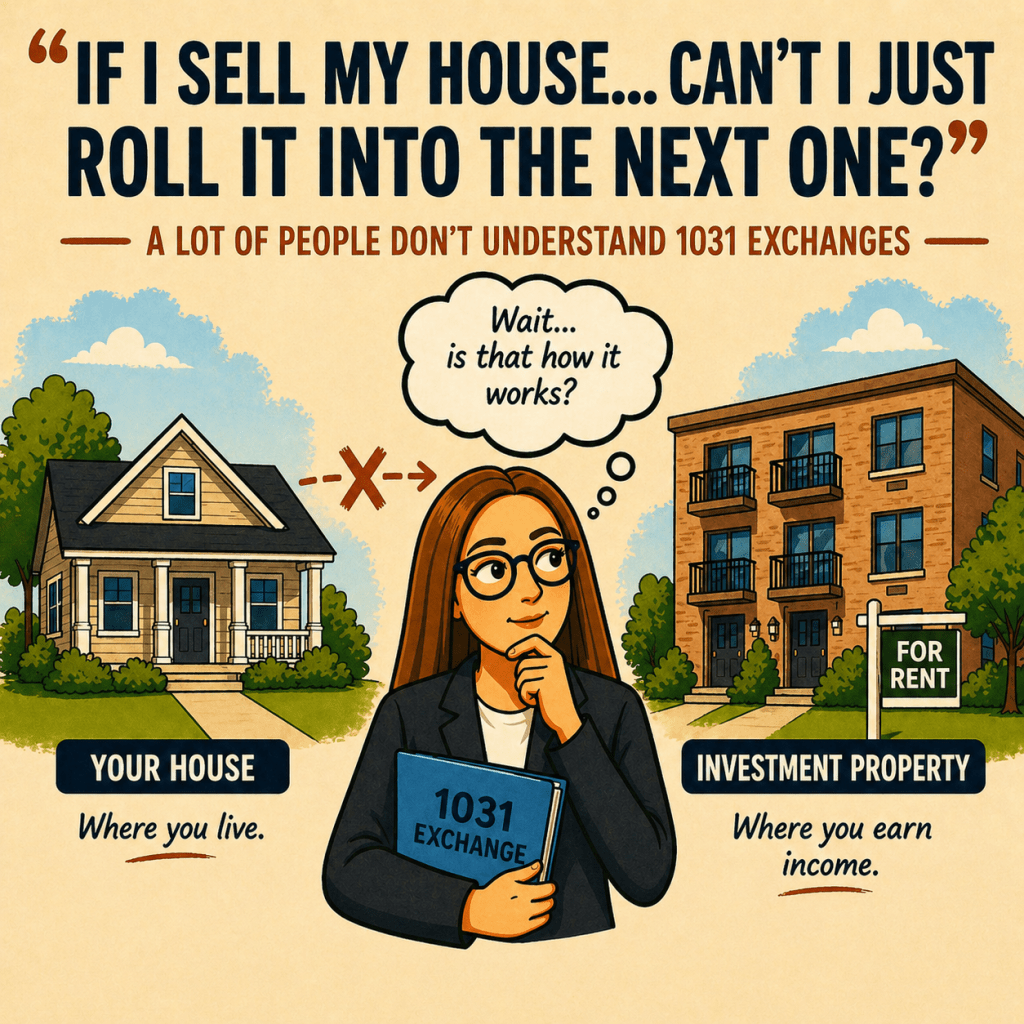
A 1031 exchange is something that everyone talks about, and many people don’t really understand correctly. It only applies to income producing properties. And yes, even some agents still get that wrong.
What it is, is a tax deferral strategy. You sell one qualifying property, reinvest the proceeds into another, and push the capital gains taxes down the road. You have to have a qualified intermediary. Usually your real estate attorney will have a relationship with one, so they can guide you- but if you look it up, there are plenty of them out there.
There are also strict timelines. From the day you sell, you have 45 days to identify your replacement property, and 180 days total to close on it. Miss either of those windows and the whole thing falls apart.
You have to remember that it’s not really making the taxes go away, exactly. Technically, it’s a deferral. But in reality, if you keep exchanging and hold the final property until you die “swap til’ you drop”, there can be a step up in basis that wipes out the deferred gain. So, in the right scenario, those taxes may never actually get paid.
I personally think that some people get caught up in the idea of this “hack” to eliminate taxes, when it’s not always the best choice for their lives. I’ve seen so many landlords who are ready to be done with the grind of investment properties just keep rolling into new properties to chase that deferred tax outcome. My advice is that a certain point, it’s okay to say, “I’ve had a great run, I’m cashing out”- but hey, that’s just my opinion.
As with anything real estate or just in life, you need to really think about your own personal situation and what best fits your goals.
Price it right. Keep it accessible. Respond quickly when I need you to. If those three things stay intact, the deal has a better chance of moving forward favorably.
My job is not to take sides (although I will sit and listen if you need to vent!). My job is to keep things moving, keep things organized, and make sure the decisions that actually impact the outcome don’t get lost in everything else.
Decisions still need to be made, and they need to be made clearly. Price changes, offer responses, repairs, closing timelines. If those get delayed or inconsistent, buyers feel it immediately and start to pull back.
It’s not uncommon to have two separate or a neutral third party closing attorney. I can help guide that process and connect you with people who deal with these situations regularly so things stay clean and focused.I also act as a buffer. Not everything needs to be a direct conversation.
I can coordinate showings, manage access, keep communication structured, and make sure nothing stalls out over avoidable friction.
Getting the property ready has to be straightforward. Cleaning, staging, small repairs. If that turns into a point of conflict, it delays everything and shows in how the property presents.